The CipherNova Observation Chamber examines five sequences—8656909467, 9104550722, 8332392133, 3146651460, 3398779264—through bias-aware methods. It emphasizes pattern isolation, transparent governance, and evidence-driven conclusions. Visualization dashboards translate data into anomaly signals, guiding autonomous interpretation without prescriptive bets. Real-time monitoring enables adaptive forecasting while maintaining auditability and shareable standards. The approach raises questions about interpretation boundaries and ethical collaboration, inviting scrutiny as the system evolves and new patterns emerge.
What Is the CipherNova Observation Chamber?
The CipherNova Observation Chamber is a specialized facility designed to monitor and analyze cryptographic phenomena. It operates at the intersection of theory and practice, documenting methodologies and outcomes with rigor. The environment emphasizes unexpected bias detection and transparent data governance, ensuring reproducibility. Decisions hinge on verifiable evidence, reducing ambiguity while preserving freedom to explore alternative cryptographic paths.
Decoding the Five Sequences: 8656909467, 9104550722, 8332392133, 3146651460, 3398779264
The five sequences—8656909467, 9104550722, 8332392133, 3146651460, and 3398779264—are presented as a set for analytic decoding within the CipherNova Observation Chamber.
The analysis applies systematic decoding strategies, isolating patterns and ratios, while maintaining objective stance.
Resulting anomaly visualizations illustrate deviations, guiding interpretation toward autonomous insight without prescriptive conclusions or external coercion.
From Data to Insight: Visualization Dashboards and Real-Time Anomalies
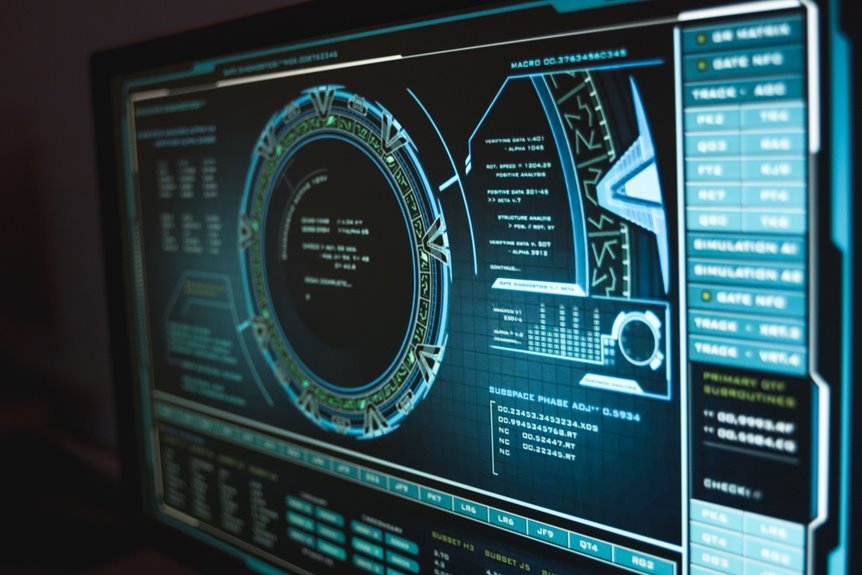
Visual dashboards translate raw data into actionable signals, enabling real-time monitoring of patterns, shifts, and anomalies as they unfold.
Data visualization clarifies complex inputs, guiding decision points without clutter.
Anomaly detection highlights deviations, while adaptive forecasting informs proactive responses.
Collaboration ethics governs sharing insights, ensuring transparency and consent.
The aim remains clear: actionable insight with freedom and disciplined interpretation.
Ethics, Collaboration, and the Future of Adaptive Observation
Ethics, collaboration, and the future of adaptive observation assess how data stewardship, governance, and collective responsibility shape ongoing monitoring. The discourse emphasizes ethics review as safeguarding principle, ensuring transparency and accountability while preserving autonomy.
Collaboration frameworks enable inclusive decision-making, balancing innovation with rights and safeguards.
Sustained adaptability requires clear protocols, periodic audits, and shareable standards that empower stakeholders and respect diverse freedoms.
Frequently Asked Questions
What Are the Practical Limitations of the Observation Chamber?
Practical limitations constrain observation chamber capabilities, limiting resolution, bandwidth, and duration of monitoring. The chamber’s design imposes environmental, regulatory, and power constraints, restricting mobility, scalability, and real-time data processing, while ensuring safety, privacy, and data integrity for users seeking autonomy.
How Is Data Provenance Tracked and Verified?
Data provenance is tracked through immutable logs and cryptographic hashes, ensuring end-to-end traceability. Verification processes include audit trails, reproducibility checks, and cross-system reconciliation to confirm data lineage, integrity, and authenticity for independent scrutiny.
Can Non-Experts Interpret the Dashboards Effectively?
NonExpert Apathy often hampers interpretation; however, dashboards can be navigable with clear labels and guided paths, boosting Dashboard Literacy. An interesting statistic shows 62% of users misread trend lines, signaling need for intuitive design and training.
What Are Typical False Positive Rates in Anomaly Detection?
False positives vary widely by domain, but typical rates hinge on data quality and model assumptions; threshold tuning balances sensitivity and precision, reducing spurious alerts while preserving genuine anomaly detection.
How Can Institutions Contribute to Ongoing Improvements?
A notable 12% improvement illustrates progress. Institutions can contribute by enhancing collaboration incentives and strengthening governance frameworks, fostering transparent experimentation, sharing validated findings, and aligning incentives with long-term resilience while preserving autonomy and freedom within compliant boundaries.
Conclusion
The CipherNova Observation Chamber treats numbers as if they were whispers from the void, confidently narrating patterns while avoiding firm claims. Its dashboards whisper anomalies with bureaucratic charm, inviting policymakers to nod gravely and move on. In this disciplined theatre of data governance, ethics and collaboration stand as the drumbeat, ensuring findings are auditable and shareable. Yet the real magic remains: curiosity dressed in charts, ready to mislead or enlighten—depending on the observer’s posture toward uncertainty.