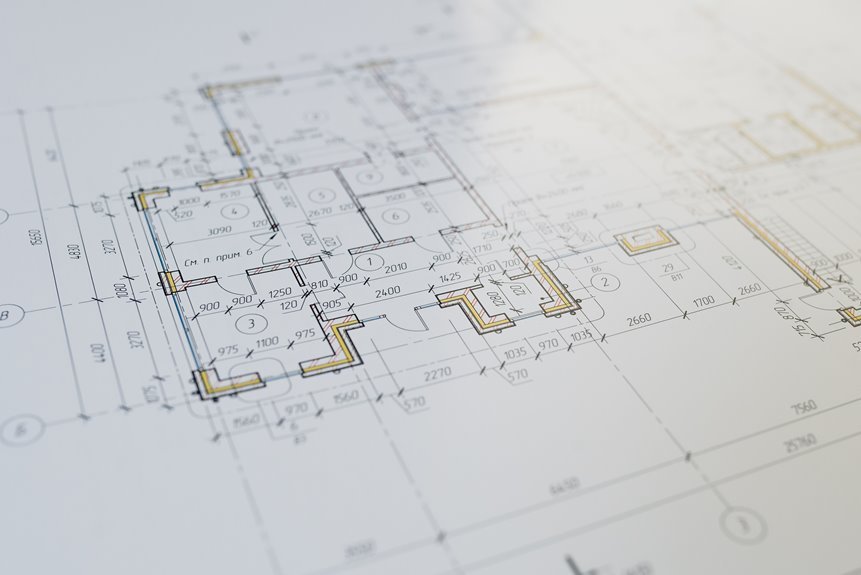
The HelioMatrix Coordination Register consolidates alignment parameters, governance roles, and data streams for five nodes. It standardizes ownership, handoffs, and audit trails while enabling scalable, auditable workflows. The framework supports early detection, automatic triage, and rapid issue resolution across the participating teams. Its structured approach invites scrutiny of interoperability and resilience. Stakeholders should consider how centralization affects autonomy and what metrics will prove sustained alignment. The next step is to examine concrete implementation details.
HelioMatrix Coordination Register: What It Is and Why It Matters
The HelioMatrix Coordination Register is a structured ledger that tracks alignment parameters and scheduling across the HelioMatrix system. It clarifies governance frameworks and data stewardship, delineating responsibilities and access controls. It also specifies interoperability standards and risk assessment protocols, enabling transparent collaboration while preserving autonomy. The register thus supports freedom through disciplined, auditable coordination and accountable decision-making.
Centralizing Teams, Data Streams, and Timelines in One Framework
Centralizing teams, data streams, and timelines within a single framework enables unified governance and streamlined collaboration across the HelioMatrix ecosystem.
The approach aligns diverse functions through explicit alignment principles, ensuring consistent decision criteria and accountability.
Governance frameworks codify roles, data ownership, and milestone tracking, reducing fragmentation.
This structure supports scalable coordination, transparent reporting, and rapid, principled alignment across all operational layers.
Real-World Usage: How Nodes 18003654884, 18882089943, 2897891012, 2042897546, and 18005672639 Illustrate Rapid Issue Resolution
How do specific HelioMatrix nodes demonstrate rapid issue resolution in practice? The five nodes initiate rapid response routines, detecting incident patterns early and triggering automatic triage. They preserve system resilience through parallel retries and data integrity checks, while structured cross team handoffs ensure continuous situational awareness, minimizing downtime and enabling focused remediation across domains.
Designing Scalable Workflows With the Coordination Register for Future Projects
Designing scalable workflows with the Coordination Register streamlines future projects by codifying repeatable patterns, governance, and handoff protocols. The framework supports modular design, clear ownership, and auditable decisions, enabling responsive teams to scale without friction. It emphasizes designing scalability and data governance, ensuring consistent data quality, access controls, and lineage. This detached approach preserves autonomy while aligning on shared standards and measurable outcomes.
Frequently Asked Questions
How Are Privacy and Security Enforced in the Heliomatrix Coordination Register?
Privacy and security are governed by formal privacy governance, regular security auditing, and scalable controls, while legacy integration and scalability costs are managed to minimize exposure; failure isolation across nodes, coordination metrics, and tool interoperability ensure robust protection and resilience.
What Are the Cost Implications of Scaling the Register for Large Teams?
Cost implications include rising per-user charges and infrastructure needs; scaling considerations emphasize modular deployment, predictable licensing, and governance overhead, while preserving autonomy. The assessment favors lightweight protocols, cost-conscious automation, and clear budgeting for expanding large teams.
How Does Failure Isolation Work Across Multiple Nodes?
Failure isolation is achieved through multi node coherence, isolating faults to local subsets while maintaining stable global state. Privacy enforcement and security controls guard data; scaling costs rise with coordination metrics and tool integration, yet robust fault domains reduce cross-node impact.
Which Metrics Best Indicate Coordination Efficiency Improvements?
Coordination metrics best indicate improvements in shared workloads and response latency, reflecting efficiency indicators across nodes. The metrics include throughput stability, clock-synchronization precision, fault containment rate, and decision latency, demonstrating measurable, actionable efficiency gains for distributed coordination.
Can the Register Integrate With Legacy Project Management Tools?
Coincidence marks the moment: the register can integrate with legacy project management tools, though integration latency varies by toolchain, and cross team dashboards may streamline visibility despite potential compatibility gaps for certain platforms.
Conclusion
The HelioMatrix Coordination Register weaves coincidence into collaboration: shared timelines align with individual autonomy, as nodes repeatedly converge on common milestones. In this synchronized pattern, governance and data lineage emerge as predictable byproducts, not burdens. The register’s structure reveals that effective triage and auditable handoffs stem from deliberate, parallel trajectories. Ultimately, coincidence tethers disparate teams to a unified cadence, enabling scalable, resilient workflows across the network.