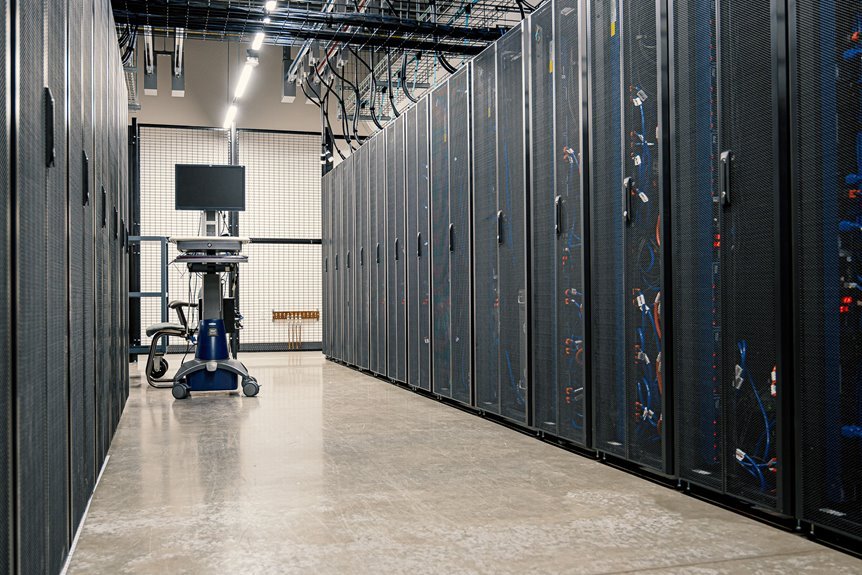
The Network Infrastructure Reliability Analysis File consolidates fault, latency, and load data across telemetry, flow records, and passive monitoring. It applies standardized sampling, latency budgeting, and scenario modeling to enable early warning and reproducible analyses. The approach supports auditable alerts, actionable troubleshooting, and capacity planning with traceable governance. This structured framework invites evaluation of resilience across services and assets, while inviting further scrutiny to ensure objective adaptation.
What Is Network Reliability Analysis and Why It Matters
Network reliability analysis assesses how well a networked system maintains its intended performance under varying conditions, including failures, congestion, and evolving workloads. It quantifies resilience through standardized methodologies, guides proactive risk reduction, and informs governance. By aligning data-driven metrics with industry practices, it supports transparent decision making in network design and capacity planning, promoting freedom through dependable, scalable infrastructure.
Core Metrics and Data Sources for Fault, Latency, and Load
Effective measurement of fault, latency, and load requires clearly defined core metrics and reliable data sources, aligned with established industry practices. Core metrics include fault tolerance indicators, latency distribution, and load variance. Data sources span telemetry, flow records, and passive monitoring. Data visualization and anomaly detection drive proactive risk awareness, with standards-based governance ensuring reproducibility and actionable insights. continuous, objective, standardized evaluation.
A Practical Framework: Sampling, Modeling, and Early Warning
A practical framework for sampling, modeling, and early warning integrates systematic data collection with rigorous analytics to illuminate fault, latency, and load dynamics before thresholds are breached.
The approach combines latency budgeting, fault taxonomy, and scenario modeling to quantify risk, set tolerances, and trigger proactive mitigations.
Standards-based methods ensure reproducibility, independent verification, and transparent alerts, supporting freedom to adapt architectures confidently.
From Telemetry to Action: Troubleshooting, Improvements, and ROI
Throughput and reliability data are translated into actionable steps by linking telemetry signals to concrete troubleshooting workflows, disciplined improvements, and measurable ROI.
The analysis emphasizes network latency patterns, standardized fault tolerance checks, and capacity planning scenarios.
A data governance framework ensures traceability, while proactive dashboards translate insights into repeatable, auditable actions, reducing risk and enabling freedom through informed, objective decision-making.
Frequently Asked Questions
How to Compare Reliability Across Different Network Segments Quickly?
A quick segment comparison is achieved by standardizing network metrics, aligning time windows, and applying percentile-based framing; results are then visualized, enabling proactive, data-driven decisions while preserving freedom to act across diverse network segments.
What Are Hidden Costs of Implementing Continuous Telemetry?
Hidden costs of implementing continuous telemetry include data storage, processing power, and security governance; continuous telemetry introduces ongoing maintenance, tool licensing, and integration overhead, while compliance and scalability demands drive incremental operational costs and safeguards for freedom-reliant teams.
Which Vendors Offer Real-Time Latency Anomaly Detection?
Vendor latency and anomaly detection are offered by Dynatrace, Datadog, Splunk, AppDynamics, and New Relic, among others. The data-driven, proactive approach aligns with standards-based monitoring, enabling freedom-loving teams to rapidly identify and resolve real-time latency anomalies.
How to Prioritize Fixes With Limited Engineering Bandwidth?
Prioritize fixes by impact, aligning with scaling constraints and bandwidth tradeoffs. The approach favors high-severity latency anomalies, reproducible wins, and incremental improvements, guided by standards-based metrics, data-driven audits, and a freedom-friendly, transparent decision-making process.
Can AI Automate Root Cause Without Human Input?
AI automation cannot fully replace human input; it assists in identifying potential Root cause signals, accelerates investigation, and enforces standards. It enables data-driven, proactive workflows, preserving freedom while outlining transparent, auditable steps for verification and governance.
Conclusion
This framework yields a measured, constructive view of network resilience, emphasizing preventive care over reactive fixes. By aligning metrics with standards and embracing standardized sampling, it gently guides stakeholders toward proactive governance. Early warnings translate into orderly, data-driven responses, reducing risk while preserving service continuity. The approach fosters transparent decision-making, traceable governance, and measured ROI, embedding continuous improvement as a natural cadence. In sum, reliability becomes a steady, attainable objective rather than an elusive target.