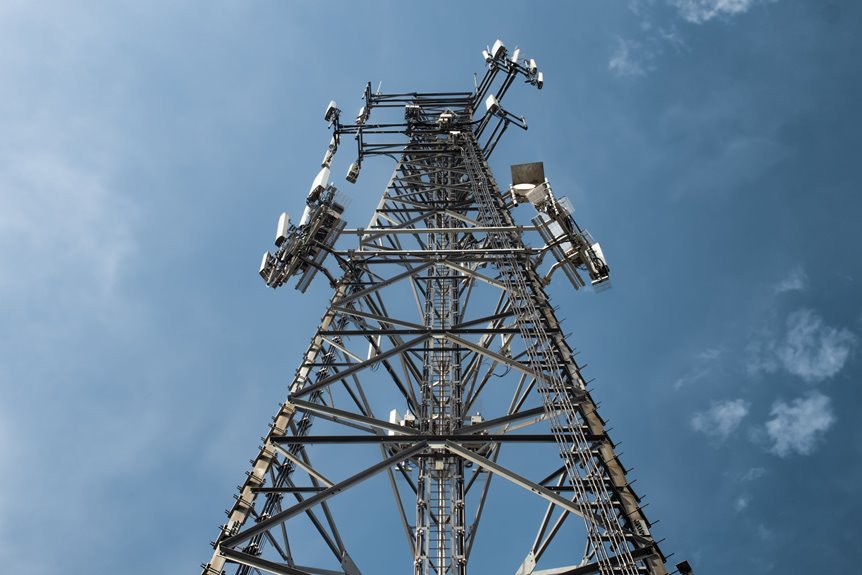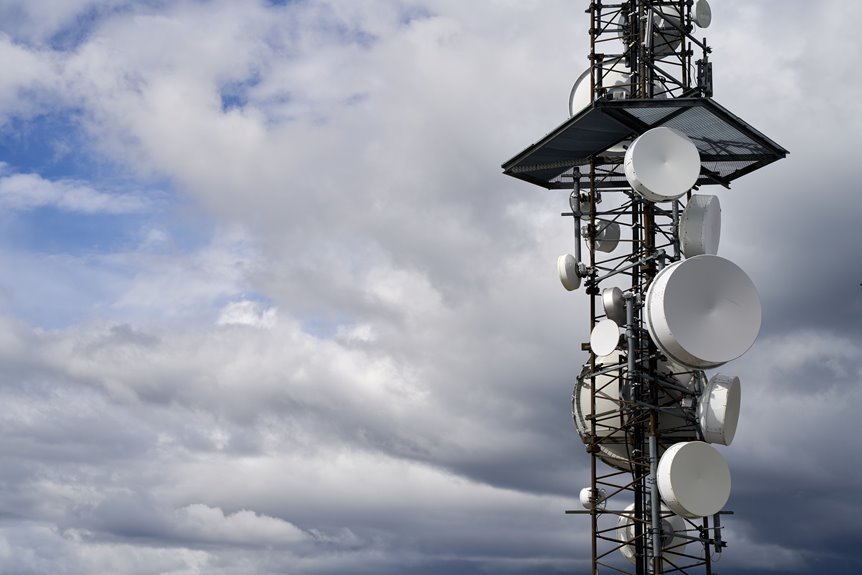
The Telecom Infrastructure Monitoring Report consolidates asset-centric metrics, telemetry, and AIOps to deliver standardized SLAs and proactive risk assessments across cell towers, data centers, and backhaul. It emphasizes automated validation, governance, and prioritized signals to reduce alert fatigue while supporting capacity planning. The document presents a structured pathway from data collection to proactive outage prevention, inviting scrutiny of how these components align with portfolio-specific performance targets and decision-making workflows. Further examination will reveal which signals matter most in practice.
What Telecom Infrastructure Monitoring Really Delivers for 18885299777, 2042897277, 18008870224, 18002228794, 8564837958
Telecom infrastructure monitoring delivers a structured, data-driven view of network health and performance across the specified portfolios, enabling proactive issue detection, rapid root-cause analysis, and informed capacity planning.
The system highlights insight gaps and facilitates vendor comparisons, delivering objective performance metrics, standardized SLAs, and actionable risk assessments.
Decision-makers gain clarity on service reliability, resource alignment, and optimization opportunities across diverse infrastructure assets.
How to Assess Monitoring Needs Across Cell Towers, Data Centers, and Backhaul Links
Determining monitoring requirements across cell towers, data centers, and backhaul links requires a structured, asset-centric approach that identifies critical performance indicators, data collection points, and alert thresholds tailored to each domain.
Evaluation emphasizes network optimization and capacity planning, aligning instrumentation with service level expectations, redundancy needs, and operational workflows while minimizing data noise, ensuring scalable, actionable insights for diverse, distributed infrastructure environments.
Key Metrics, Tools, and Predictive Analytics That Improve Uptime
To achieve sustained uptime across distributed infrastructure, the focus shifts to identifying key metrics, leveraging appropriate tools, and applying predictive analytics that anticipate failures before they impact service.
Metrics include latency, jitter, MTTR, and error rates; tools span telemetry, AIOps, and dashboards; predictive analytics model failure likelihood, remaining useful life, and capacity trends.
Brainstorming session uncovers latency tradeoffs, resilience, and proactive remediation.
Implementation Roadmap: From Data Collection to Proactive Outage Prevention
An effective implementation roadmap translates raw data collection into actionable, proactive outage prevention by aligning data sources, telemetry capabilities, and analytics workflows with operational objectives.
The framework emphasizes data governance to ensure integrity, security, and accountability, while reducing alert fatigue through prioritized, context-rich signals.
It codifies roles, governance policies, and automated validation, enabling proactive mitigation without compromising system freedom or agility.
Frequently Asked Questions
How Do Regulatory Changes Affect Monitoring Data Retention?
Regulatory changes constrict or extend data retention scopes, mandating archival timelines and access controls. Regulatory compliance requires alignment of monitoring data practices with legal mandates, influencing storage formats, deletion cycles, and auditability, while preserving operational transparency and risk visibility.
What Are Common False Positives in Outage Alerts?
False positives in outage alerts commonly arise from noisy sensors, transient network hiccups, and misconfigured thresholds. For data retention, monitoring audits verify signal integrity, correlation logic, and alert provenance, ensuring robust validation without compromising timely incident detection and accountability.
Can Monitoring Data Influence Budget Forecasts for Upgrades?
A striking 28% variance in alert-led spend aligns with upgrade planning timelines. Monitoring data can influence budget forecasts by identifying costly recurring incidents, quantifying ROI for capacity, and informing phased investments alongside risk-adjusted prioritization for upgrades.
How Do You Secure Sensitive Monitoring Data at Scale?
Data security at scale relies on secure transmission channels and robust access governance, minimizing exposure risks; automated key management, granular permissions, continuous monitoring, and immutable audit trails enable scalable, compliant protection for extensive monitoring datasets.
What Training Is Required for Operators to Use the System?
Training requirements focus on operator onboarding, precise handling of monitoring data retention, data security, and false positives, balancing budget forecasting with rigorous security. It overcomes the objection that training is optional, outlining a precise, analytical program for unrestricted operational freedom.
Conclusion
This report juxtaposes granular telemetry with strategic clarity, revealing that visibility alone does not guarantee reliability. Data-rich dashboards illuminate faults, yet governance and automated validation prevent noise from masquerading as urgency. In cell towers, data centers, and backhaul, proactive patterns emerge only when predictive analytics are anchored to standardized SLAs. The result is a disciplined balance: operational discipline meets inventive analytics, delivering measurable resilience without alert fatigue and enabling informed, timely decision-making.